SpinDrive at the Forefront of Innovation
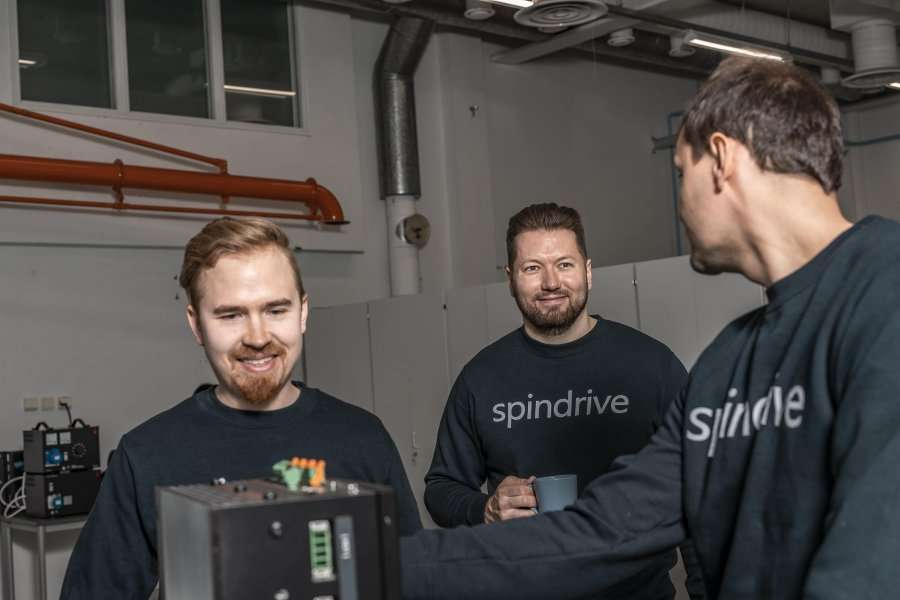
SpinDrive long-term innovation partner: Lappeenranta University of Technology (LUT University)
LUT University based in Lappeenranta, Finland stands out for its academic excellence and research expertise in engineering and technology. Renowned for its specialization in renewable technology, clean water and energy initiatives, as well as its commitment to addressing climate change through sustainable engineering solutions, LUT University remains at the forefront of innovation and environmental stewardship.
LUT University has been a forerunner in high-speed technology having roots of high-speed research in the early 80’s. The history has elements from a thriller by a famous Finnish author Ilkka Remes involving the parties of the Cold War and MIR submarines. Since the 80’s, the research results have been spun out from the university in different ways, including technology transfers of commercial innovations and university spin-off companies.

LUT University’s Lappeenranta Campus
“At LUT University, we drive the renewal of industrial production through digitalization, the circular economy, innovative materials, and improved processes. We provide an excellent research environment for our students, helping them pursue their dreams. We believe our research has not only scientific value but also commercial potential to address many industrial challenges. The research around the high-speed machinery has been the common nominator for dozens of research projects and commercial innovations during the past four decades” says Associate Professor Janne Nerg of LUT University.
The establishment of SpinDrive
The establishment of SpinDrive traces back to its roots at LUT University. It was there that our co-founders, brought together by their desire to make an impact, recognized a critical need within the industry. They witnessed firsthand the challenges faced by original equipment manufacturers (OEMs) in sourcing sufficient and cost-effective solutions for active magnetic bearings (AMB).
Fueled by a mission to reduce CO2 emissions and enhance energy efficiency in industrial processes, SpinDrive emerged. With a clear vision to provide easily accessible and affordable solutions for active magnetic bearings, our founders embarked on a journey to transform the landscape of the industry. Thus, SpinDrive was born, driven by innovation, passion, and a dedication to addressing the pressing needs of our time.
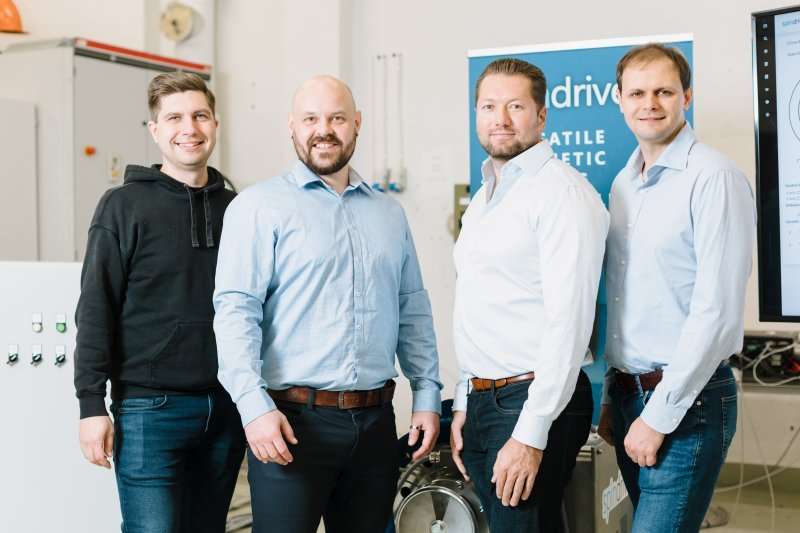
SpinDrive co-founders
Pioneering the Future of High-Speed Machines with Wide Applicability
The long-term partnership between LUT University allows SpinDrive to be at the intersection of innovation and research of high-speed machinery. One of the projects in the near history, while SpinDrive co-founders were still with the university, was HERGE, a high-temperature hermetic generator equipped with AMBs. After proving the effectiveness of the 1 MW HERGE machine, it became clear that there was a need to develop an even more powerful next-generation machine. This led to the project focusing on creating a multi-megawatt high-speed machine, for which SpinDrive designed the AMBs as an established company.
LUT University took the initiative to start researching standardizing high-speed machines on the megawatt scale, aiming for a wide-range applicability. This approach would allow for the same unit to be utilized across various applications by simply attaching different working tools to the same high-speed machine. This eliminates the need for custom integration each time, streamlining the manufacturing process from the earliest design stages. To address the challenge of meeting diverse process requirements without overcomplicating the electric motor component, the team proposed a solution: implementing standalone high-speed electric motors paired with interchangeable working tools. Active magnetic bearings were recognized as the enabler of this innovative approach.
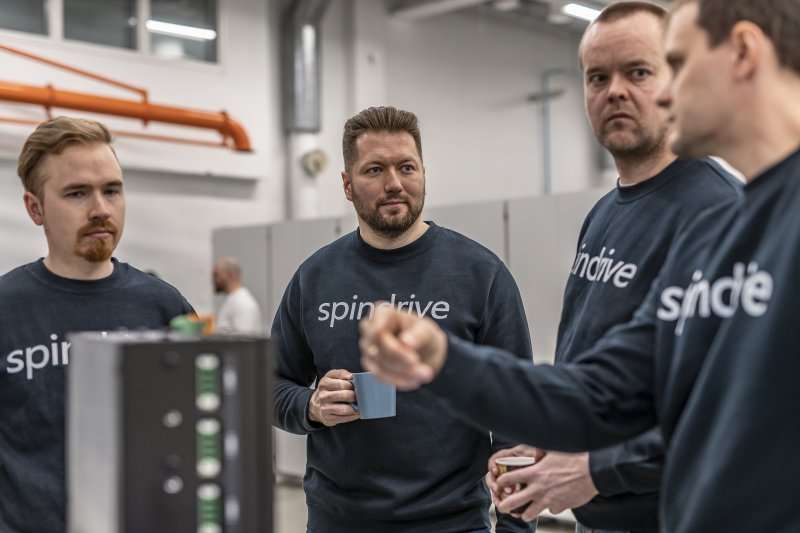
SpinDrive experts in customer project discussion
This project’s technical aim was to develop an overall concept allowing the motor and working tool to merge. A standard high-speed motor operates with a setup featuring two radial and one axial active magnetic bearing. Additionally, the working tool is supported by an extra active magnetic bearing, which can function as a third radial magnetic bearing or an auxiliary axial bearing if there are substantial axial loads from the process.
A key aspect of this project was using active magnetic bearings and testing other technical solutions. Featured extra magnetic bearing allowed to explore the control of the rotor’s flexible modes. After designing the mechanical and electromagnetic components, the machine was manufactured and assembled at the university.
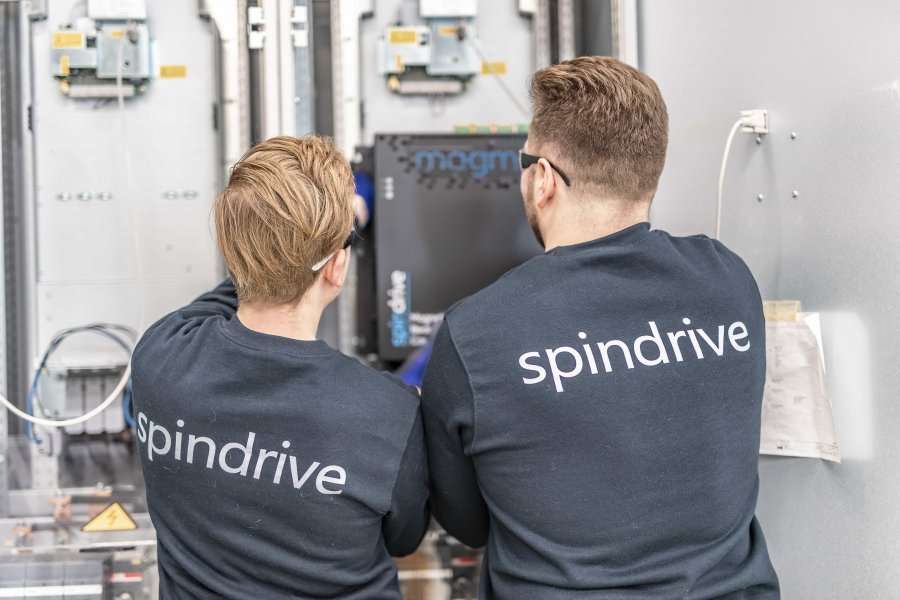
SpinDrive experts installing Magma to the control cabinet
“SpinDrive role was to provide a reliable industrial product, specifically a magnetic bearing controller, that could enable wide-range machine applicability. We introduced our Magma X800, capable of levitating the machine and supporting the development. SpinDrive was responsible for delivering Magma X800 and AMB commissioning to meet the ambitious project goals.” says Alexander Smirnov, CTO of SpinDrive. “We developed a control algorithm to stably levitate the rotor, and until today the system has been successfully tested up to its nominal speed.” Alexander added.
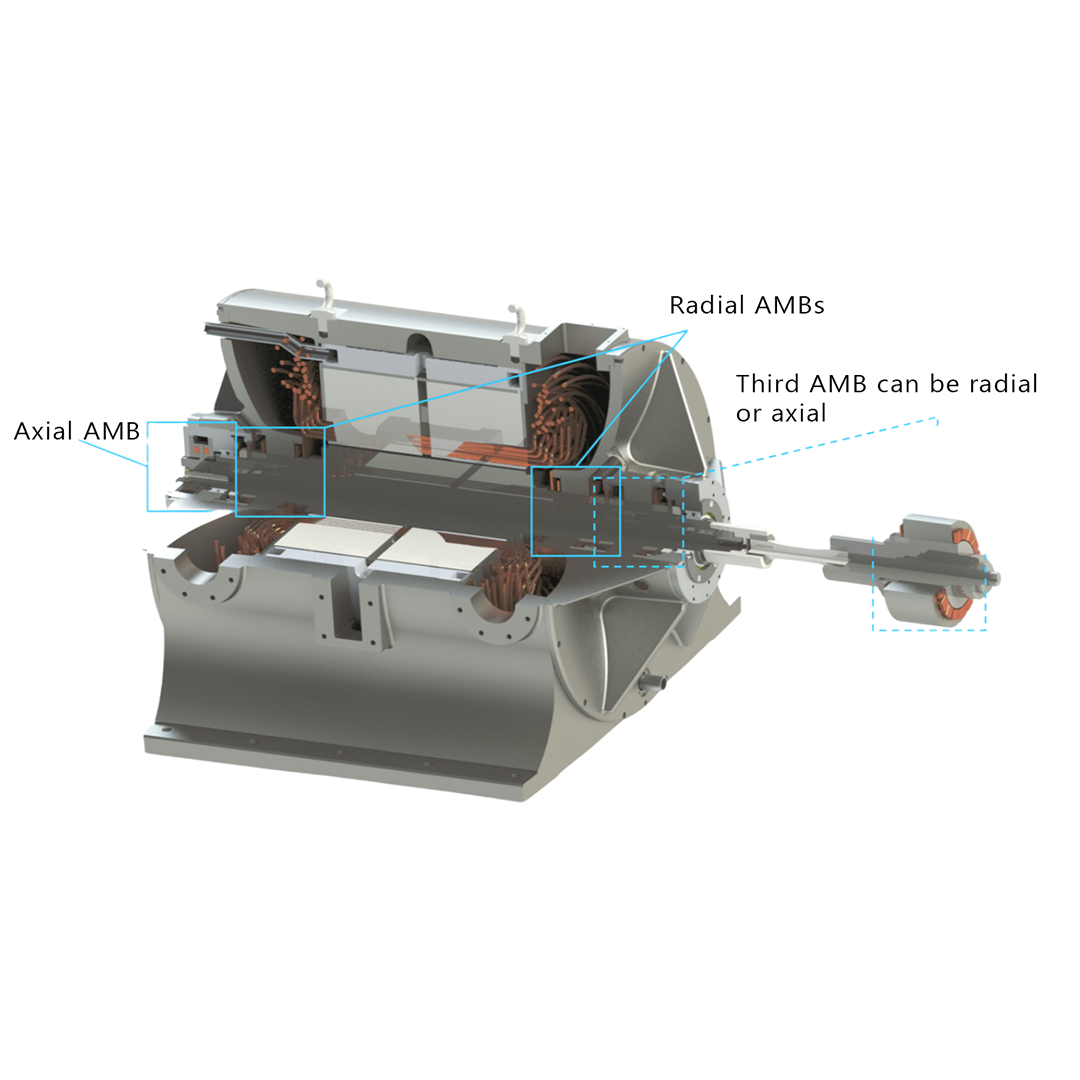
Three-AMB concept invented by LUT University
During the project, the main obstacle was unbalanced magnetic pull (UMP) from the electric motor. However, SpinDrive specialists were able to quickly tackle this. Solving the challenge with UMP required proper identification of the machine at various speeds to estimate the effect and extent of the magnetic pull on the bearings. With broad industrial experience and the capabilities of Magma X800 SpinDrive specialists were able to quickly tackle this obstacle. Once this was done, the system reached nominal speed with a robust and stable controller.
Milestones achieved
SpinDrive and LUT University have successfully achieved stable levitation of the high-speed multi-megawatt electrical machinery using magnetic bearings. Until today, the tests were done at no-load conditions, which means that we tested the operation without additional loads emulating the process loads. These tests demonstrate that the control system functions as intended, laying a strong foundation for further testing and development.
“We are very pleased with the results we’ve achieved so far with the support of the SpinDrive team. Communication has been seamless, and the SpinDrive team understands our needs and expectations. Mutual understanding, and close and warm relations makes work much easier compared to working with more remote partners.” says Janne Nerg.
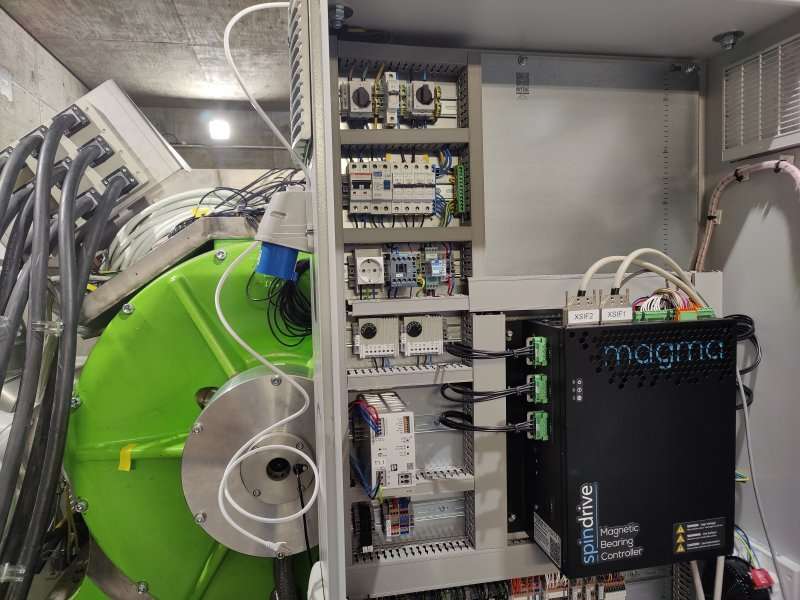
Magma AMB controller installed with the high-speed multi-megawatt machine at LUT University high-speed test bunker
Progressing to the next phase
The next step in the project implementation is to test the machine at loaded conditions. This will be performed by coupling the machine with another motor back-to-back. As the load machine is a regular type of electric motor running at moderate rpms, the target rpm of the load machine is achieved using a gearbox. This, in turn, means that the load machine and the gearbox are supported by conventional rolling element bearings. Thus, the system assembly includes the AMB supported high-speed motor which is flexibly coupled with rigidly supported gearbox and electric motor.
There are some technical challenges to overcome related to dynamics of the system and uneven heat distribution and geometric discrepancies due to thermal expansion. “We are confident that we can overcome any challenges that we face during the coming load tests. We will support LUT University in achieving their project objectives. The tests will demonstrate the success of developing a new high-speed multi-megawatt machine capable of covering wide range of industrial applications.” Alexander concluded confidently.
For more information, please contact
Janne Heikkinen, CEO and Co-founder
+358 40 0464 823
You might also be interested in:
Runtech EP1000 Turbo Blower started up at Ankutsan A.S., Turkey